Published on 4/9/2026 by Alexandra SCHERRER
Last updated : 11/3/2026
Introduction : AI-Powered Phishing, a Growing Threat
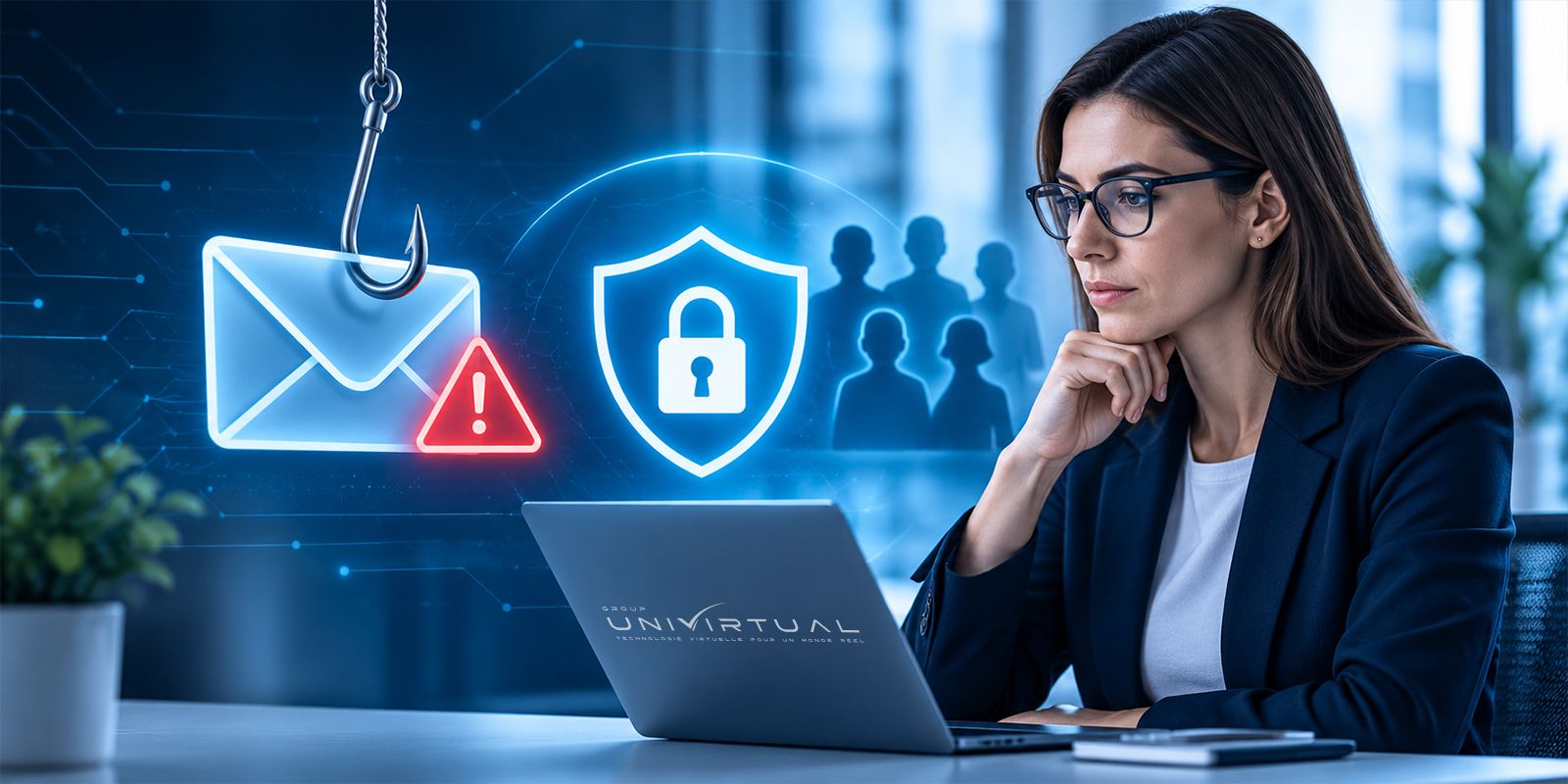
Phishing remains a major threat to businesses. With artificial intelligence, cybercriminals can now create more convincing fraudulent emails, personalise their messages and impersonate executives or business partners.
These new techniques make email fraud more difficult to detect. Spelling mistakes and suspicious wording are no longer sufficient to identify an attack.
Businesses must therefore strengthen their protection against phishing by combining employee awareness, access security and cybersecurity tools.
AI-Powered Phishing : What Are the New Threats ?
Artificial intelligence makes it easier to create personalised and convincing messages. Attackers can imitate professional communications to persuade victims to click on a link, disclose their credentials or make a payment.
The main threats include :
- Personalised fraudulent emails, tailored to the professional context
- Identity impersonation, particularly involving executives or suppliers
- Financial fraud, such as fraudulent payment instructions
- Audio and video deepfakes, used to make a request appear more credible
The risk is no longer limited to email: phone calls and collaboration tools can also be exploited.
How Can You Recognise an AI-Powered Phishing Attempt ?
An AI-generated email can be perfectly written. It is therefore essential to assess the context and nature of the request.
Several warning signs should raise suspicion :
- An urgent or unusual request
- An unexpected login link
- A change to bank details
- A request for confidential information
- A request that bypasses internal procedures
If in doubt, verify the sender's identity through an independent channel, without using the contact details provided in the suspicious message.

How Can You Protect Employees Against Phishing ?
An effective strategy relies on several complementary measures.
Raise Employee Awareness
Regular training and phishing simulations help employees recognise risks and develop the right habits. It is also important to make reporting suspicious messages straightforward.
Strengthen Email Security
Businesses should use email filtering solutions, scan attachments and links, and configure SPF, DKIM and DMARC to help prevent certain forms of domain spoofing.
Secure IT Access
Multi-factor authentication (MFA), privilege management and connection monitoring reduce the risks associated with stolen credentials. Where possible, phishing-resistant methods such as FIDO2 security keys should be prioritised.
Establish Verification Procedures
Bank transfers, changes to bank details and sensitive requests should be subject to independent checks. Urgency must never replace a verification procedure.
Cloud and Cybersecurity : Strengthening Business Resilience
Protection against phishing must be part of a broader corporate cybersecurity strategy. A properly secured infrastructure helps protect identities, monitor access and limit the consequences of a compromised account.
Backup management, system monitoring and incident response preparation are also essential to maintaining business continuity.
Businesses must therefore combine employee security, data protection and infrastructure resilience.
Why Choose UNIVIRTUAL to Support Your Digital Strategy ?
Combating phishing requires a comprehensive approach that combines security, access management and reliable infrastructure.
UNIVIRTUAL supports businesses with their cloud computing, cybersecurity and digital infrastructure projects, focusing on security, performance and resilience.
Discover UNIVIRTUAL's solutions to support your digital transformation needs.
Conclusion : Making Prevention a Shared Responsibility
Artificial intelligence is making certain phishing attacks more convincing. To address this threat, businesses must strengthen technical controls, raise employee awareness and formalise verification procedures.
Protection against phishing is a shared responsibility involving users, IT teams and management. Anticipating these risks helps reduce fraud and strengthen the organisation's security over time.