Published on 8/5/2026 by Daniel SCHNETZER
Last updated : 8/5/2026
Introduction : European Data Centers at the Heart of Digital Transformation
Data centers have become essential to modern business operations. Business applications, data storage, cloud services, artificial intelligence and cybersecurity all rely on digital infrastructure capable of ensuring availability, performance and security.
Over the next decade, these infrastructures will face several major challenges: growing demand for computing power, increasing pressure on energy resources, rising cyber threats and stricter digital sovereignty requirements.
For CEOs, CIOs, CTOs and CISOs, choosing a data center is no longer simply a technical decision. It directly affects business continuity, risk management, regulatory compliance and competitiveness.
In this context, European data centers play a strategic role. Their evolution will help determine whether organizations can build secure, reliable and adaptable digital environments for the future.
Digital Sovereignty : Regaining Control Over Data
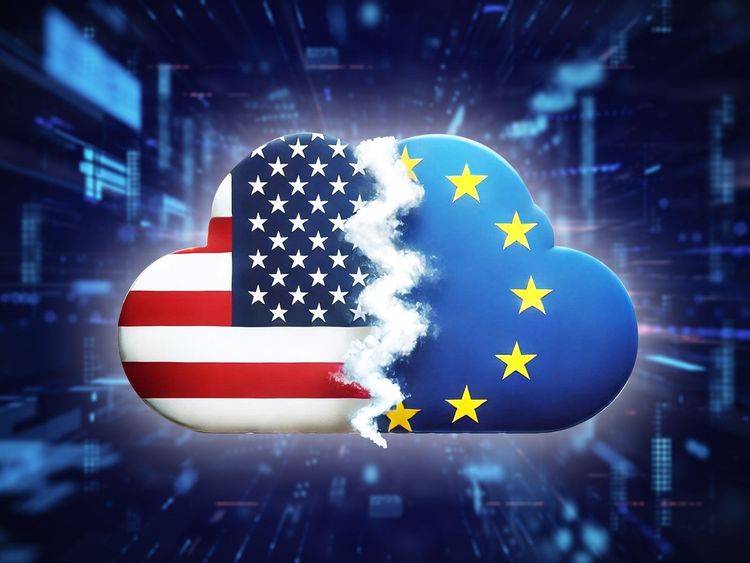
Digital sovereignty is one of the key challenges facing European data centers. Organizations need to understand where their data is hosted, which legal jurisdictions apply and who can access their information.
Hosting data in Europe can help organizations meet applicable GDPR requirements, but geographical location alone does not guarantee full digital sovereignty. The provider's legal status, administrative access, subcontractors and applicable legislation must also be considered.
This issue is particularly important for organizations handling sensitive or strategic information, including healthcare providers, financial institutions, industrial companies and public-sector organizations.
Decision-makers should assess several criteria :
- The physical location of data and backups
- The legal jurisdiction governing the provider and its subcontractors
- Control over technical and administrative access
- Transparency regarding operations, maintenance and support
- The ability to retrieve data and switch providers
By 2035, digital sovereignty will increasingly need to be treated as a core IT governance requirement rather than a simple geographical consideration.
Cybersecurity : Protecting Increasingly Exposed Infrastructure
Data centers host resources that are critical to business operations. This concentration makes them strategic assets, but also potential targets for cybercriminals.
Threats do not affect servers alone. They can target network equipment, administration interfaces, monitoring tools, supply chains and third-party providers with privileged access.
Data center cybersecurity therefore requires a defense-in-depth approach combining physical security, logical security and continuous operational monitoring.
Key measures include :
- Multi-factor authentication for sensitive access
- Network segmentation to limit the spread of attacks
- Strict management of administrative privileges
- Continuous monitoring and detection of suspicious activity
- Isolated backups and regularly tested recovery procedures
- Regular security audits and incident response plans
Regulatory requirements also reinforce these priorities. Depending on their activities and role, organizations may be subject to the GDPR, the NIS2 Directive and other sector-specific obligations.
The objective is to move beyond minimum compliance and build resilient digital infrastructure capable of limiting the impact of incidents and restoring services within defined timeframes.

Energy Transition : Balancing Performance and Efficiency
Growing computing requirements, particularly those driven by artificial intelligence, are putting increasing pressure on energy infrastructure. Data centers must deliver more capacity while controlling electricity consumption and cooling requirements.
The energy transition is therefore an economic, environmental and operational challenge.
Several measures can improve efficiency, including modern cooling systems, optimized server workloads, infrastructure virtualization and the use of lower-carbon energy sources where available.
The Power Usage Effectiveness (PUE) indicator measures a data center's energy efficiency by comparing total facility energy consumption with the energy used by IT equipment. However, PUE alone cannot capture the full environmental impact of an infrastructure.
Organizations should also consider water consumption, electricity sources, equipment lifecycles and opportunities to reuse waste heat.
In the coming years, data center performance will no longer be measured solely by available computing capacity. Energy efficiency, cost control and environmental transparency will become increasingly important decision-making criteria.
High Availability and Resilience : Preparing for Service Disruptions
A power failure, network outage, hardware malfunction or cyberattack can interrupt services and lead to significant consequences, including financial losses, unavailable applications and reduced customer trust.
High availability aims to keep services running despite the failure of individual components. It relies on redundant equipment, diverse network paths, monitoring systems and rapid failover mechanisms.
However, having multiple servers does not automatically guarantee resilience. A common-mode failure, configuration error or site-wide incident can affect several redundant components simultaneously.
Organizations must therefore define their recovery objectives :
- RTO (Recovery Time Objective): the target maximum time required to restore a service
- RPO (Recovery Point Objective): the maximum acceptable amount of data loss, expressed in time
These objectives help determine appropriate replication, backup and disaster recovery strategies.
Resilience also requires regular testing, documented procedures and a suitable distribution of risks across multiple sites. Geographic separation, independent power supplies and network operator diversity are important considerations.
By 2035, organizations will need a comprehensive business continuity strategy rather than relying solely on an infrastructure provider's technical availability guarantees.
Scalability and Artificial Intelligence : Preparing Tomorrow's Infrastructure
The growth of artificial intelligence, data analytics and distributed applications is transforming business requirements. Infrastructure must accommodate variable workloads, increasing data volumes and sometimes substantial computing demands.
This evolution requires data centers that can scale without compromising availability or creating uncontrolled cost increases.
Virtualization and cloud computing make it possible to pool resources, adjust capacity to actual demand and simplify the deployment of IT environments. DevOps practices further support automated deployments and more efficient infrastructure management.
For decision-makers, the priority is to select an architecture suited to business needs rather than systematically overprovisioning resources.
A hybrid strategy can combine controlled European infrastructure, scalable cloud services and dedicated environments for sensitive applications.
This approach requires clear governance covering cost management, application portability, access controls and technology dependency.
Tomorrow's data centers will therefore need to combine scalability, interoperability and operational control to support long-term digital transformation.
Why European Data Center Locations Remain Strategically Important
Choosing a data center in Europe can bring infrastructure closer to users and business operations. This proximity can help reduce latency, facilitate technical operations and support compliance with applicable data-location requirements.
France and Switzerland are relevant options for organizations seeking to diversify their European hosting arrangements. However, site selection must be based on concrete criteria, including connectivity, power availability, physical security, disaster recovery capabilities and regulatory requirements.
It is also important to distinguish a data center's physical location from the effective sovereignty of the services operating within it. Provider governance, data access and contractual terms remain decisive factors.
Organizations should evaluate infrastructure according to its security, resilience, transparency and ability to support future requirements.
Conclusion : European Data Centers as a Long-Term Strategic Decision
Over the next decade, European data centers will face interconnected challenges involving digital sovereignty, cybersecurity, the energy transition, high availability and scalability. These issues extend far beyond technical considerations because they directly influence business continuity, regulatory compliance and risk management.
Organizations must develop hosting strategies aligned with their business priorities, security requirements and growth objectives.
With its digital infrastructure in France and Switzerland, UNIVIRTUAL supports organizations in evaluating cloud computing, virtualization and IT resilience strategies.
Discover UNIVIRTUAL and its digital infrastructure solutions to identify approaches suited to your performance, security and digital sovereignty requirements.