Published on 11/3/2026 by Daniel SCHNETZER
Last updated : 11/3/2026
Introduction : Bare Metal Servers, a Dedicated Infrastructure for Demanding Business Needs
Today, businesses must balance IT performance, data security, application availability and cost control. In this context, infrastructure choices are strategic decisions that directly influence the reliability of information systems.
A bare metal server addresses these requirements by providing a physical machine dedicated to a single customer, without sharing its hardware resources with other users. Unlike certain virtualised cloud architectures, it provides direct access to physical computing, memory and storage resources.
This approach is particularly relevant for organisations running business-critical applications, processing large volumes of data or requiring a predictable and controlled IT environment.
But how does a bare metal server work ? What are its advantages, limitations and most relevant business use cases ?
Bare Metal Server : Definition and How It Works
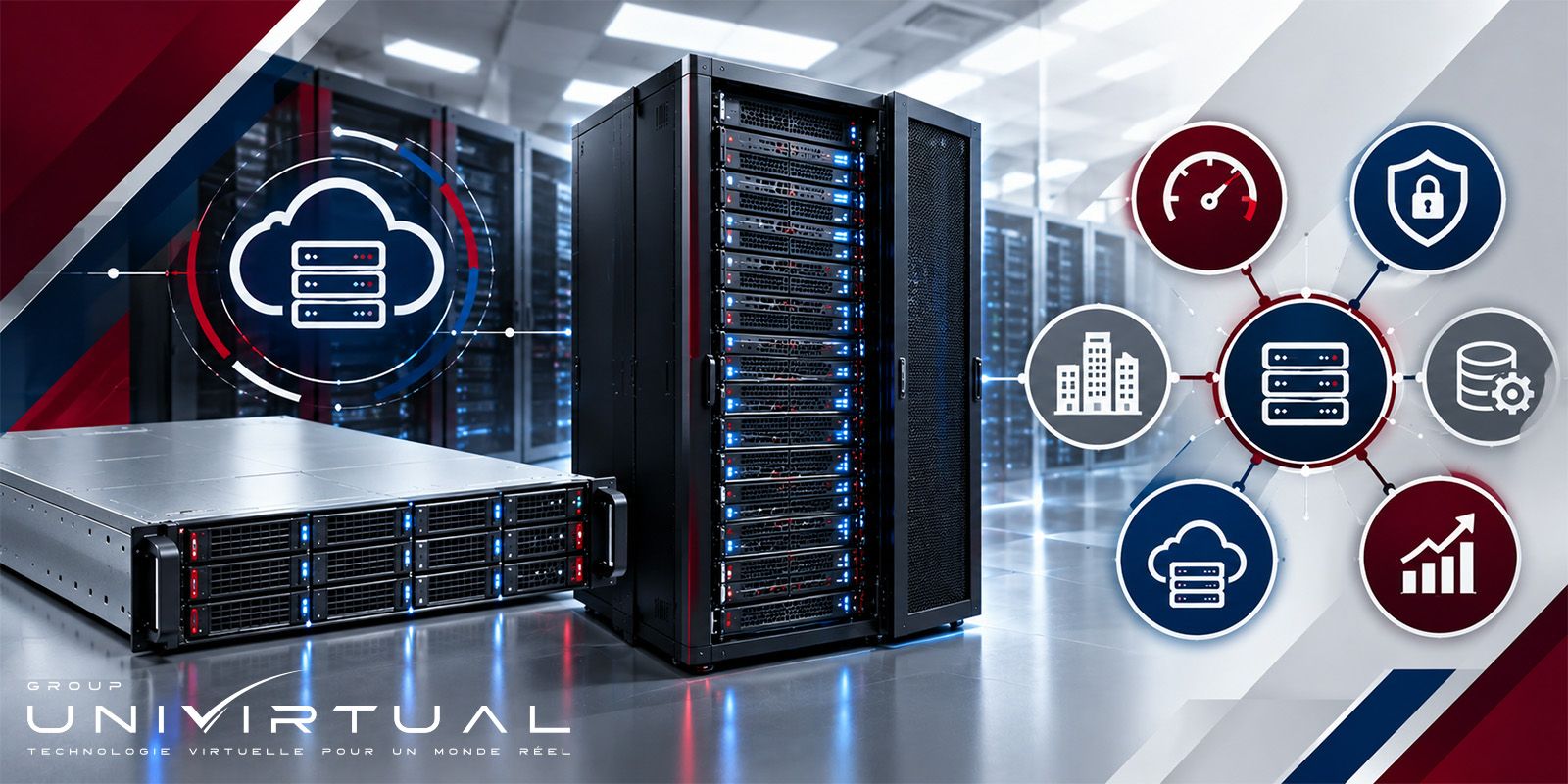
A bare metal server is a physical server whose hardware resources are exclusively allocated to one organisation. It generally includes one or more processors, RAM, storage drives and network interfaces.
The operating system is installed directly on the hardware or, depending on the architecture, on top of a virtualisation layer. This configuration makes it possible to deploy applications without sharing physical resources with other customers' workloads.
A bare metal server relies on several key components :
- Processor (CPU) : Executes instructions and application workloads
- RAM : Handles data and processes currently in use
- Storage : Hosts operating systems, applications and business data
- Network : Enables communication with users, applications and other infrastructures
Organisations can therefore tailor their IT environments to their technical requirements, select their operating systems and define their own configuration and security policies, within the limits of their hosting agreement.
What Are the Benefits of Bare Metal Servers for Businesses ?
The main advantage of bare metal lies in direct control over physical resources. This offers several benefits for organisations whose applications require stable and predictable performance.
Performance for Demanding Workloads
With a dedicated physical server, hardware resources are not shared between multiple customers. This configuration reduces performance fluctuations caused by competing workloads on the same host.
It is particularly suitable for large databases, transactional applications, analytical workloads and software requiring significant CPU or memory resources.
Enhanced Hardware Isolation
Bare metal provides physical resource isolation between customers. This reduces certain dependencies associated with shared hardware environments.
Such isolation can help organisations meet specific security or compliance requirements. However, it does not eliminate the need for additional safeguards, including system hardening, access controls, encryption, monitoring and regular security updates.
Greater Control Over the IT Environment
Bare metal allows organisations to select software components, system configurations and storage mechanisms suited to their applications.
This flexibility makes it easier to optimise performance and support specific technical requirements, particularly in production environments and complex information systems.
Bare Metal vs VPS vs Private Cloud : What Are the Differences ?
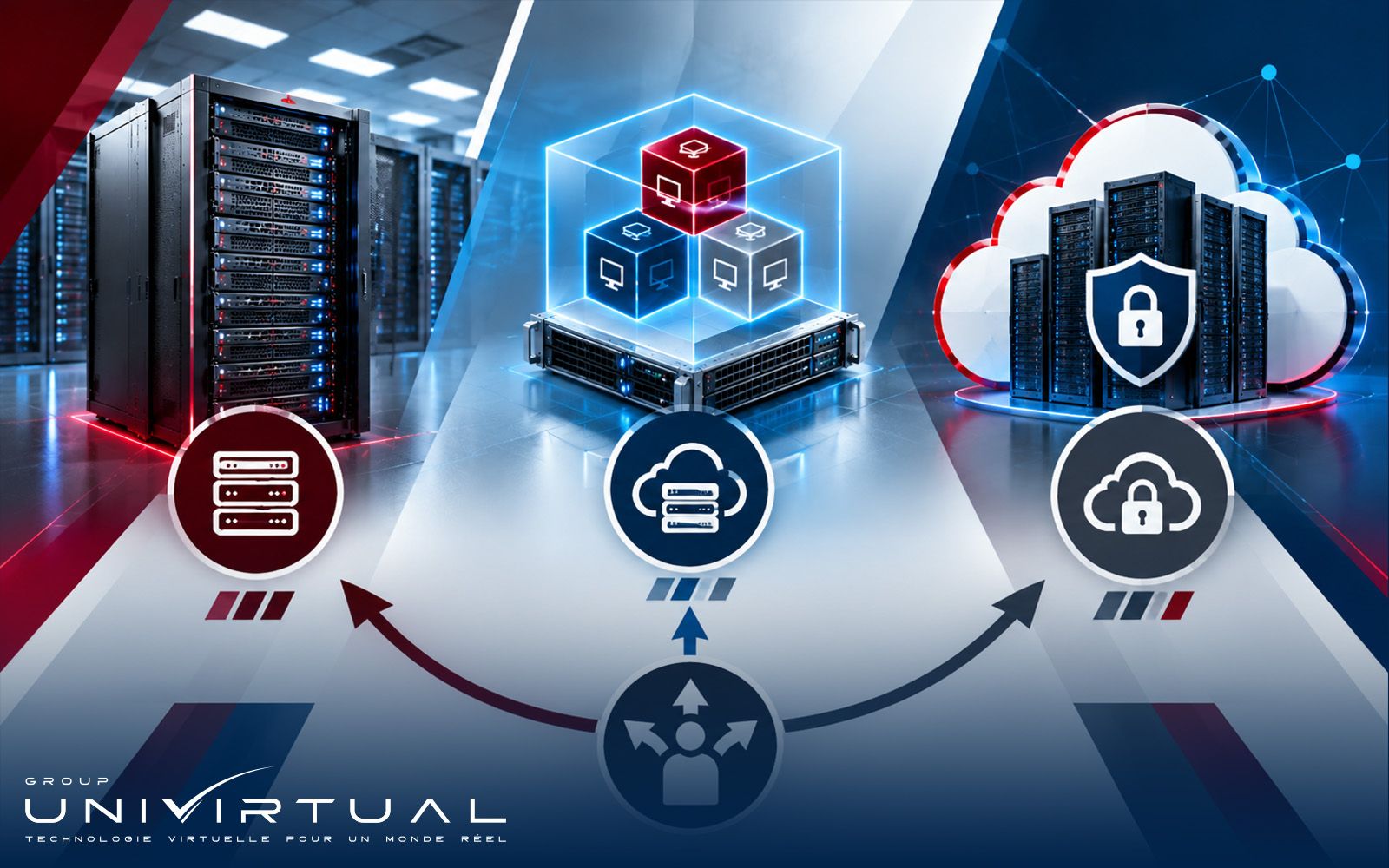
Choosing between a bare metal server, a VPS and a private cloud mainly depends on performance, flexibility and infrastructure management requirements.
- Bare metal server : Provides dedicated physical resources to a single organisation. It is suitable for demanding workloads, large databases and environments requiring predictable performance
- VPS (Virtual Private Server) : Runs on a physical machine whose resources are shared between several virtualised environments. It provides an isolated environment, generally at a lower cost, with flexible resource allocation
- Private cloud : Provides a cloud environment reserved for a single organisation. It allows resources to be provisioned and adjusted according to business needs, while offering greater control over the infrastructure and its configuration
These solutions are not necessarily competing alternatives. A business can combine several architectures to meet the requirements of different applications and optimise its IT resources.
The decision should therefore be based on an assessment of workloads, availability requirements, security needs and total cost of ownership (TCO).
What Are the Main Business Use Cases for Bare Metal Servers ?
Bare metal servers address several business requirements when predictable resources, technical control or physical isolation are priorities.
Hosting Business-Critical Applications and Databases
Business applications, transactional platforms and high-traffic databases can benefit from dedicated hardware resources. The objective is to limit performance fluctuations and maintain precise control over the execution environment.
Big Data, High-Performance Computing and Specialised Workloads
Analytical processing, scientific computing and certain artificial intelligence applications may require substantial computing power, high memory capacity or specialised hardware accelerators.
Bare metal makes it possible to tailor configurations to these requirements, provided the appropriate hardware components are available.
Hosting High-Traffic Digital Services
High-traffic websites, complex application platforms and certain production services can benefit from dedicated infrastructure when resource requirements are substantial and relatively predictable.
Sensitive Environments and Compliance Requirements
Organisations handling sensitive data may choose bare metal to maintain greater control over their hardware and software environments. However, data centre location, access management and contractual arrangements remain essential considerations.
A dedicated server alone does not guarantee regulatory compliance or high availability. These objectives require appropriate infrastructure design and operational procedures.
Security, Availability and Digital Sovereignty : Key Considerations
Operating a bare metal server involves several technical responsibilities. Depending on the service agreement, the provider may manage the hardware and certain infrastructure operations, while the customer remains responsible for the operating system, applications and their security.
A robust strategy should include :
- Data backups, with regular recovery testing
- Infrastructure monitoring, to detect incidents quickly
- Redundancy, to minimise interruptions caused by hardware or network failures
- Cybersecurity measures, including strict access management, security updates and log monitoring
- Disaster recovery planning, with RPO and RTO targets aligned with business criticality
Infrastructure location is also a strategic consideration. Hosting data in European data centres can facilitate data governance and help organisations address digital sovereignty requirements, although it does not replace a comprehensive legal and contractual assessment.
Why Integrate Bare Metal into a Hybrid Cloud Strategy ?
Bare metal should not necessarily be viewed as a complete alternative to cloud computing. It can instead form part of a hybrid cloud architecture combining physical servers, virtual machines and cloud services.
This approach allows organisations to place each workload in the environment best suited to its technical requirements. Resource-intensive applications can benefit from dedicated physical infrastructure, while services requiring rapid deployment or flexible scalability can run in virtualised environments.
For CIOs and CTOs, the challenge is to design a consistent architecture that accounts for application dependencies, security requirements, operating costs and availability objectives.
The total cost of ownership (TCO) should include hardware or hosting contracts, software licences, administration, backups, security, maintenance and capacity expansion requirements.
Conclusion : Choosing Bare Metal Servers Based on Business Requirements
A bare metal server is a relevant solution for businesses seeking dedicated physical resources, predictable performance and greater control over their IT environments. It is particularly suitable for certain critical workloads, without necessarily replacing the benefits of virtualisation or cloud computing.
The decision should be based on a detailed assessment of applications, security requirements, availability objectives and overall infrastructure costs.
UNIVIRTUAL supports businesses in their cloud computing and digital infrastructure strategies, with an approach focused on performance, security, resilience and control over hosted environments.
Discover the solutions offered by UNIVIRTUAL and identify the infrastructure best suited to your requirements: dedicated servers, VPS or private cloud.